 Skip to content
You run a recycling business and you want the best price. You may ask, “How Do I Sell My Recycling Business”? Many owners fear low offers. They see messy records, weak operational efficiency, and tricky environmental permits.
Here is one fact. The recycling industry in the U.S. supports over 500,000 jobs and makes more than $100 billion a year. Demand will grow, as the circular economy and advanced recycling technologies expand.
This guide will show clear steps to boost your business valuation, by improving operational efficiency, meeting environmental compliance, cleaning up financials, and readying your materials recovery facility for sale.
Key Takeaways
- Prepare clean financials, asset audits, and permits to hit top valuations from private equity or buyers like Republic Services and Waste Management.
- Improve operational efficiency, cut contamination below 8%, and show 90% local placement to raise sale price.
- Document commodity revenue, e.g., PET $309/ton, clear HDPE $734/ton, recycled paper $15/ton, to support valuation models.
- Hire an experienced broker like SellerForce (20+ years, $2 billion closed, no upfront fees) to reach buyers and speed due diligence.
Preparing to Sell Your Recycling Business
Prepare your recycling business by tightening operations, running a waste audit, and securing environmental permits with a phase I environmental site assessment (ESA). Get a clear business valuation using EBITDA multiples, hire business brokers, and sort contracts for your material recovery facility and local waste haulers.
Common Mistakes Business Sellers Make
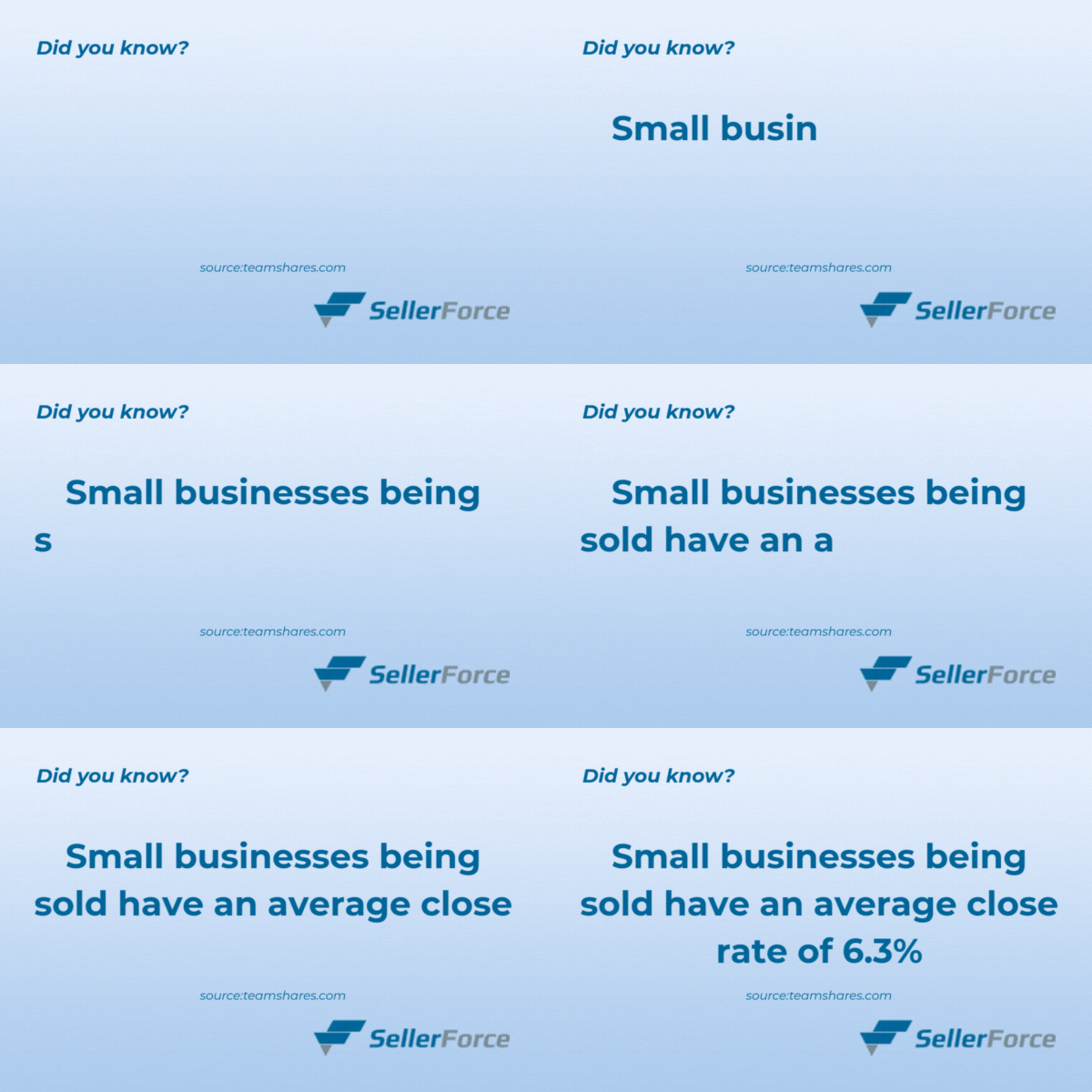
Owners who skip business brokers often sell for much less, missing higher business valuation and EBITDA multiples. Selling without intermediaries delays the sale, and owners must source and vet buyers themselves.
That path creates legal loopholes, and it weakens trust during due diligence and asset sales.
Many owners present incomplete financial statements, which scares away private equity groups and strategic consolidators. Failing local research or to secure environmental permits causes deals to stall, especially for e-waste or hazardous waste handling.
Buyers like Republic Services, WM, or regional waste haulers focus on operational efficiency, customer contracts, site assessments.
Steps to Prepare Your Business for Sale
After avoiding common seller mistakes, follow clear steps to prepare your recycling business for sale. Research specific local needs and environmental regulations. Check zoning and secure environmental permits.
Confirm regulatory compliance for hazardous waste handling and waste haulers. Prepare clear financial statements, run an asset audit, and calculate seller’s discretionary earnings (sde) for a precise business valuation.
Tidy up records to speed up due diligence. Hire a business broker who markets to private equity groups and 1supports mergers and acquisition (m&a) buyers.
Improve operational efficiency in paper and cardboard recycling, and tighten costs to boost margins. Target metal recycling, e-waste recycling, and plastic recycling, highlight advanced recycling technologies and vertical integration.
Add organic waste lines, form partnerships with local farms and landscaping businesses, and consider anaerobic digestion to create new revenue. Scale efficient processing of construction and demolition waste in urban areas to raise profits.
Align services with circular economy goals and sustainable waste solutions, appeal to strategic buyers and large recycling facilities.
Conducting a Performance Review
Use a performance review to score operations, contracts, equipment condition, and environmental compliance. Check contamination rates at Materials Recovery Facilities, aim for figures like Eureka Recycling’s below 8%.
Document that 90% of recovered materials go to local markets, and show how recycling facilities strengthen your waste management pitch.
Audit revenue from scrap metal, note high, fluctuating prices and the effect on business valuation. Spot e-waste recycling streams that yield precious metals, list gold, silver, and copper recovery for due diligence and value models.
Measure organics throughput for compost demand, cite expanding markets driven by consumer environmental awareness, and record paper and cardboard recovery tied to sustainable packaging and environmental permits.
Preparing Financial Statements and Asset Audits
Prepare clean financial statements, including balance sheet, income statement, and cash flow, and a full asset audit to show buyers clear facts. List revenues by material, noting PET at $309 per ton, clear HDPE at $734 per ton, recycled paper in NYC at about $15 per ton, and
Lakeshore Recycling Systems’ roughly $65 per ton revenue in 2018.
Show cost risks too, noting landfill disposal costs exceed $50 per ton, which can drive taxpayer bills above $3 billion a year if recyclable materials hit landfills.
Document fixed asset register entries, heavy equipment condition, environmental permits, and facility layout in accounting software or an enterprise resource planning system. Prove environmental compliance, show operational efficiency, and steady contracts to lift business valuation and appeal to private equity groups, waste management firms, and recycling facilities buyers.
Cite major investments, like Pratt Industries’ $2 billion U.S. corrugated box buildout, to show how asset scale affects price. Sustainability and waste reduction trends in the recycling industry also change how buyers value assets and recurring revenue.
Engaging Business Brokers
Selling a recycling business is complex, so a broker can add real value. SellerForce offers a 100% commission-based service with no upfront fees. Our team brings over 20 years of experience, and $2 billion in successful transactions.
Brokers help avoid undervaluation and legal pitfalls during due diligence. A broker will shortlist buyers, manage legal documentation, and secure access to sensitive data for confidentiality.
This speeds up the sale by tapping extensive buyer networks, including private equity groups and waste haulers. SellerForce commits to selling recycling businesses at the highest possible valuation.
They advise on business valuation, operational efficiency, environmental compliance, and circular economy trends to attract quality buyers.
The Role of Business Brokers When Selling Your Recycling Business
A skilled broker boosts the sale value of your recycling business, by packaging permits, contracts, and steady cash flow into a clear story. They run business valuation, open an online data room, and draw buyer interest from broker networks, private equity groups, and waste management firms.
Why Hire a Business Broker?
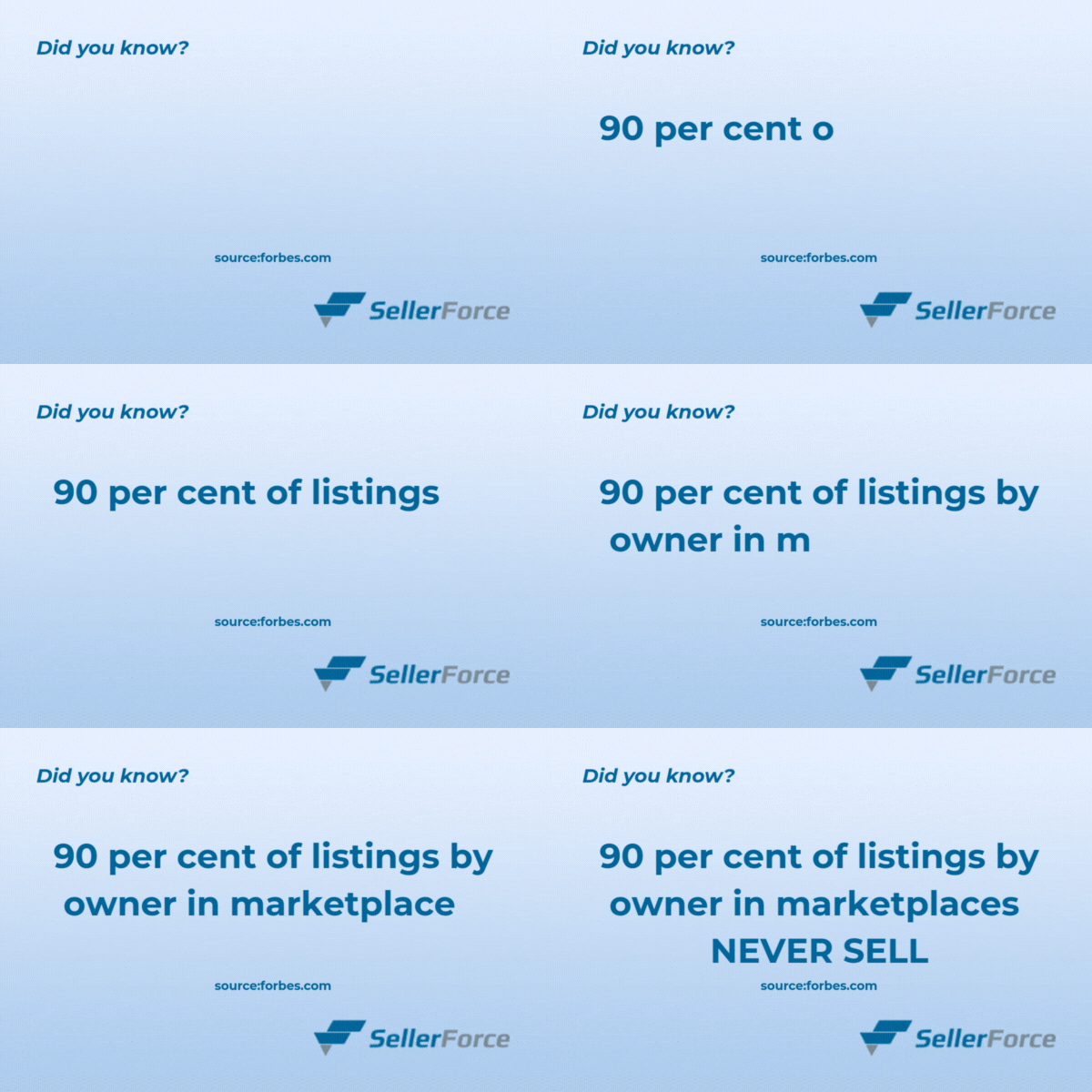
While trying to sell on marketplaces can be an option, the fact is that 90% of listings there never really sell, according to Forbes.
Brokers like SellerForce boost sale value for a recycling business. They apply business valuation methods, and use market insights for the recycling industry. SellerForce brings over 20 years of experience, and has closed $2 billion in transactions.
The firm charges no upfront fees, it works on a 100% commission model.
Experienced brokers speed the sale, by tapping professional networks and private equity groups. They screen buyers, provide qualified ones with confidential access to your business documents, and manage due diligence to prevent legal loopholes.
They frame your role in the circular economy to boost buyer interest. This lowers your administrative burden, and speeds the close.
Brokers also highlight operational efficiency, environmental compliance, e-waste recycling, and hazardous waste handling to attract buyers like Republic Services or Waste Management Inc.
Business Valuation Techniques
Buyers often use business valuation methods: income, market, and asset. Income models use revenue per ton, like LRS at $65 per ton, and New York City paper at $15 per ton, to forecast cash flow.
Commodity values feed market models, for example PET at $309 per ton and clear HDPE at $734 per ton.
Market multiples reflect the U.S. recycling industry, which generates over $100 billion in annual revenue. Construction and demolition recycling profits rise with global construction activity and municipal recycling mandates.
Buyers value firms with strong operational efficiency, clear environmental compliance, advanced recycling technologies, and waste management systems that match corporate goals to use up to 50% recycled content.
Pratt Industries’ $2 billion expansion, and a potential $1 trillion circular economy, push up asset prices and future earnings forecasts. Use market data from the London Metal Exchange, and standards from the Institute of Scrap Recycling Industries, to set realistic prices for recycling facilities, scrap yard assets, and paper recycling lines.
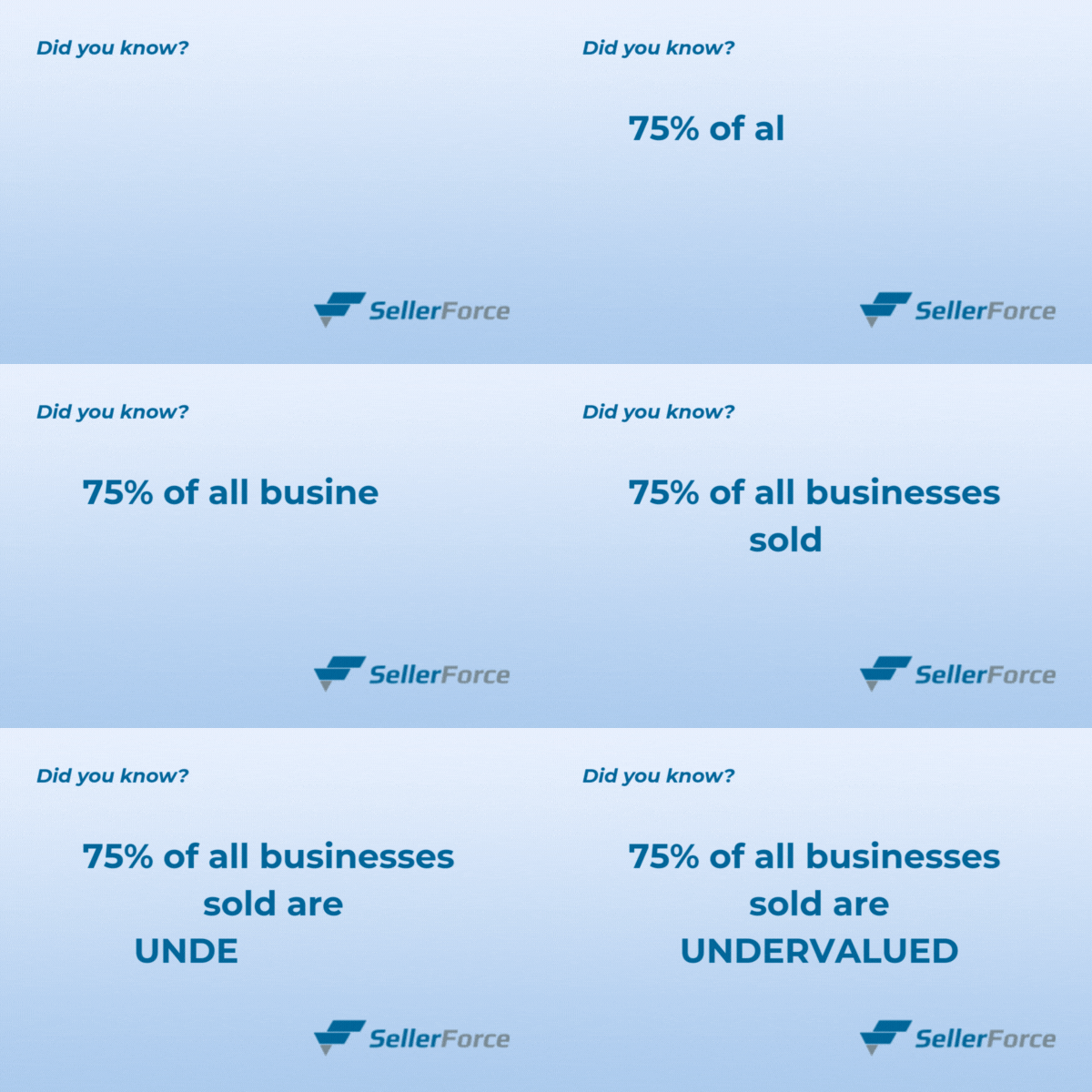
Next, manage due diligence to verify tons, environmental permits, contracts, equipment condition, and commodity mix.
Managing the Due Diligence Process
Start due diligence with an equipment and facility audit of recycling facilities, citing Pratt Industries new mills in Ohio and Indiana. Check sorting center performance using Eureka Recycling as a benchmark, with contamination below 8% and 90% of materials sent to local markets.
Measure operational efficiency against peers, note Lakeshore Recycling Systems uses over 150 employees and earns about $65 per ton revenue.
Verify environmental compliance and permits for your recycling business, and confirm hazardous waste handling and environmental insurance meet state rules. Audit customer contracts and retention rates, and review partnerships with local farms for organics recycling to show steady demand.
Compile clear financial statements that show annual revenues and profit margins, and add asset audits to support business valuation.
Marketing Strategies for Attracting Buyers
After managing due diligence, shift to marketing that sells demand and compliance. Highlight public commitments from 37 major firms, like Coca-Cola, Danone, Nestlé, PepsiCo, Unilever, and Walmart.
Cite the projected North American need of 5 million to 7.5 million metric tons of recycled materials annually by 2030. Point to the $120 billion revenue opportunity in plastics conversion, and show advanced recycling technologies, like AMP Robotics’ AI and robotic sorting.
Note that investors such as Goldman Sachs, Citi, Google, and Engie put over $210 million into circular economy firms.
Target private equity groups, waste haulers, and strategic buyers, including Republic Services and Star Recycling. Use case studies, for example Eureka Recycling, which places 90 percent of material locally, to prove local market strength.
Stress low contamination rates and strong operational efficiency to lift business valuation. Share clean financials in an online data room, add asset audits, and work with business brokers and business brokerage solutions on Offdeal and Viking Mergers and Acquisitions.
Include environmental permits, proof of environmental compliance, and records for e-waste recycling and hazardous waste handling to meet buyer requirements.
Screening Potential Buyers Through Broker Networks
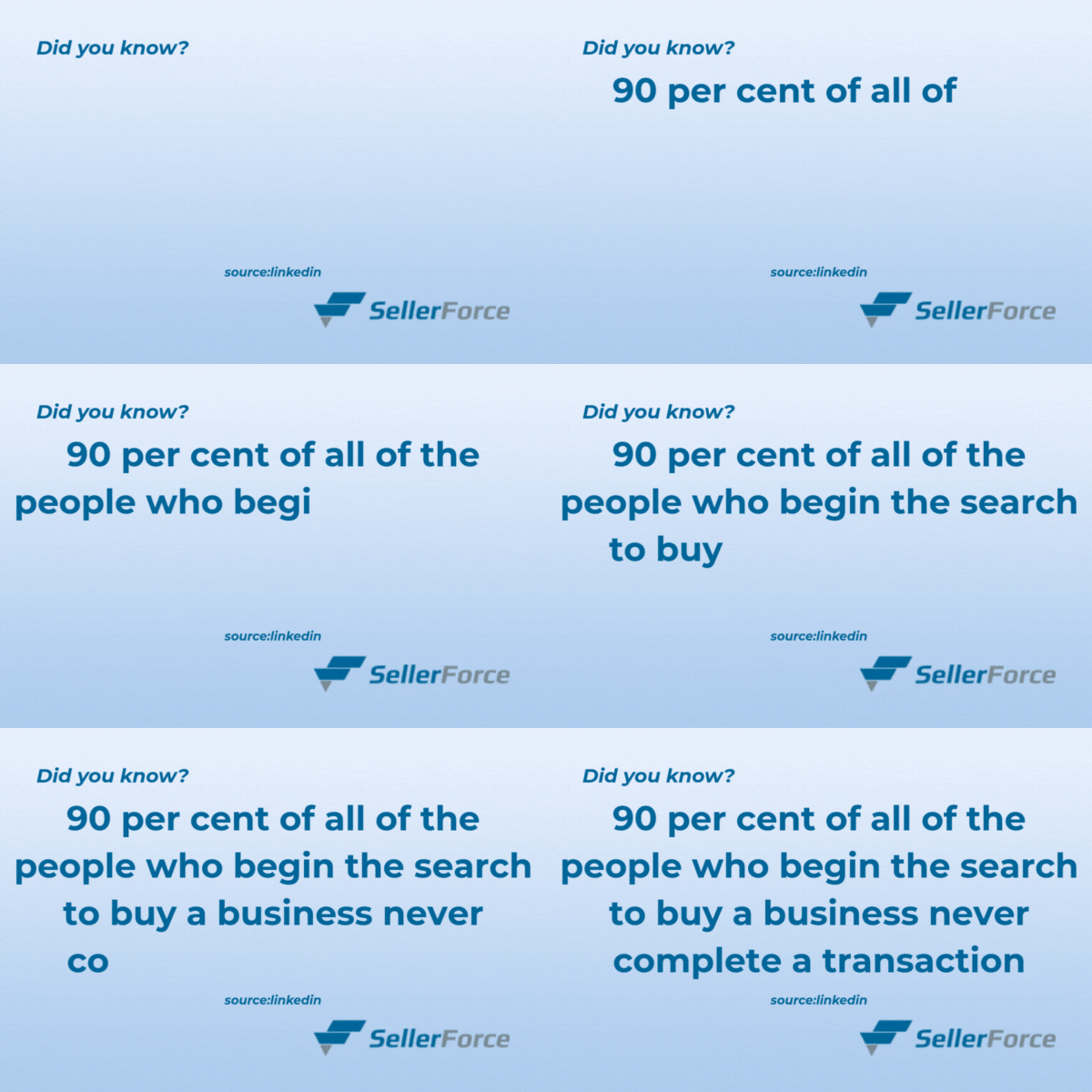
SellerForce uses 20 years of network ties and $2 billion in transactions to screen qualified buyers. Brokers quickly shortlist buyers for metal recycling solutions, e-waste recycling, plastics, and paper recycling, which speeds sale times over owner led sales.
Clients selling a recycling business gain access to buyers who value operational efficiency, steady municipal contracts, or high revenue, such as $65 per ton. Screening checks that buyers meet environmental compliance, environmental permits, and environmental regulations, and can handle hazardous waste.
Broker networks match qualified buyers from private equity groups, regional waste haulers, and national operators, with recycling facilities that need vertical integration or scale.
Deal teams ensure confidential financial and business valuation reports, helping sustainable waste solutions firms and compost manufacturers bid with confidence.
Using an Online Data Room for Confidentiality
Online data rooms let a recycling business share sensitive financial statements, asset audits, and operational data with vetted buyers, and keep the sale confidential. Business brokers use data rooms to manage legal documents, and to reduce the risk of unauthorized information disclosure.
Buyers can review equipment condition, contracts, and environmental compliance records securely, for electronic waste recycling and other recycling facilities.
The platform tracks document access, so sellers can gauge buyer interest and focus on serious offers. Data rooms speed up transaction management, they help close deals faster by keeping documents current and streamlining replies to buyer queries.
Key Value Drivers for Recycling Businesses
-Operational efficiency, environmental compliance, and steady customer contracts, tied to the circular economy, lift your sale price. Invest in advanced recycling technologies, secure environmental permits, and keep clean business valuation files to draw investors and haulers.
Operational Efficiency
Strong operational efficiency boosts a recycling business valuation. Lakeshore Recycling Systems earns about $65 per ton and employs over 150 people. Eureka Recycling sends 90% of recovered materials to local markets and keeps contamination under 8%.
Efficient sorting and processing cut costs for plastic recycling, and efficient operations in paper recycling lift profit margins. Processing construction and demolition waste yields high profits in cities.
Metal recycling benefits from strong demand and high scrap prices on the London Metal Exchange (LME). E-waste recycling sees rising demand from fast device turnover, buyers chase valuable metals.
Organic waste recycling grows through partnerships with local farms and with Atlas Organics, Bootstrap Compost, helping close the circular economy loop.
Owners should cut bottlenecks, upgrade advanced recycling technologies, and add vertical integration with waste haulers. Teams must track yields, contamination rates, and environmental compliance, and keep environmental permits current.
Brokers and buyers value clear financials, low contamination, steady contracts, and trained staff. Private equity groups, joint ventures, or strategic buyers like Republic Services pay more for efficient operations and scale.
Good operational metrics raise business valuation in the recycling industry and in waste management markets.
Environmental Compliance
Meeting environmental rules helps recycling businesses win municipal and corporate contracts. Eureka Recycling shows how high compliance can boost reputation and secure long-term deals.
Recycling reduces costs and market volatility. It encourages circular supply chains and cuts reliance on unpredictable extraction costs.
Regulatory mandates now push recycling of construction materials. E-waste recycling demand keeps rising as rules force better electronics disposal. Compliance with landfill diversion initiatives can save taxpayers over $3 billion each year.
Businesses with strong environmental permits, hazardous waste handling plans, and environmental health & safety consulting can access partnerships with firms that target circular economy goals.
Buyers will fold environmental compliance into business valuation and check operational efficiency, waste management, and ties to waste haulers, which links directly to customer contracts and retention rates.
Customer Contracts and Retention Rates
Long term contracts with manufacturers and municipalities raise retention rates. They boost business valuation for your recycling business, show operational efficiency, and support environmental compliance.
Major brands like Coca-Cola, Danone, Nestlé, PepsiCo, Unilever, and Walmart pledge to use recycled plastics, and some aim for up to 50 percent recycled content, which makes contracts more valuable to buyers and easier to present to business brokers.
New York City sells recycled paper and cardboard under municipal contracts, earning $15 per ton, and partnerships with local farms, landscaping businesses, and waste haulers expand compost and recyclable waste channels, while construction and demolition contracts keep demand steady.
Equipment and Facility Condition
High-quality equipment drives operational efficiency in a recycling business, and it boosts business valuation. Pratt Industries opened new mills in Ohio and Indiana, and pledged $2 billion for United States corrugated box manufacturing.
Modern recycling facilities, like Eureka Recycling, support efficient processing and environmental compliance.
AMP Robotics uses AI and robotic sorting, advanced recycling technologies that raise throughput and cut contamination rates. China’s ban on foreign scrap forced United States firms to invest in new infrastructure to meet domestic processing needs.
Regular asset audits spot wear, list repairs, and keep equipment value strong for buyers.
Why Work with SellerForce
SellerForce uses DCF valuation, virtual data rooms, and operational efficiency audits to raise the sale price of your e-waste recycling business. We link you to growth-stage private equity, waste haulers, and strategic buyers, and they handle permits, environmental compliance, and asset audits to speed the close.
Expertise in Local Market Conditions
We offer 20+ years of experience across local recycling markets. This helps owners of recycling business and recycling facilities meet regional environmental regulations, and secure environmental permits.
Our team knows regional differences in regulatory and operational requirements, from municipal mandates to local contract terms. We advise on maximizing value in steel & iron, e-waste recycling, and plastic recycling, and on organic waste and construction material recycling opportunities.
Past sales cover major urban and rural markets, with proven business valuation and specific sale strategies for waste recycling company owners. Our insight improves operational efficiency, boosts customer retention, and helps meet environmental compliance for buyers such as waste haulers and private equity groups.
We help sellers position for current industry trends in the recycling industry and the circular economy.
Access to Extensive Professional Networks
SellerForce’s network links recycling business sellers to a large pool of qualified buyers. That pool includes private equity groups, manufacturers, investors, and municipal buyers, and it spans waste haulers, recycling facilities, and environmental services.
Buyers focus on e-waste recycling, paper recycling, hazardous waste handling, industrial solid waste recycling business, and advanced recycling technologies for market expansion or vertical integration.
Our brokers use these connections to expedite sales and to help maximize business valuation for sellers. Contacts include Generate Capital, Radical Ventures, Ori Eldarov, Eurasian Capital, and strategic acquirers.
SellerForce secures confidential meetings and links sellers to buyers who value contracts, assets, environmental permits, and regulatory compliance.
Proven Track Record of Successful Sales
SellerForce has closed over $2 billion in business transactions over 20 years. Those deals span multiple recycling industry sectors, from paper recycling to e-waste recycling, and include small waste haulers and large recycling facilities.
Buyers included private equity groups and corporate buyers, and transactions ranged from stock sales to complex asset transfers.
The firm secures top valuations and improves sale outcomes. It reduces time on market, and it protects confidentiality and legal compliance in every deal. Our reputation rests on maximizing value and ensuring seller satisfaction, showing expertise in managing large, complex transactions that touch zoning & permits, environmental permits, operational efficiency, and environmental compliance.
Our refined business valuation methods tied to sustainable waste solutions, next review additional tips for selling your recycling business.
Additional Tips for Selling Your Recycling Business
Tighten your financials, show steady revenue, and prove environmental compliance to lift your recycling business valuation. Hire a business broker and target investment firms and industry buyers with operational efficiency and advanced recycling technologies.
Understanding Current Market Trends
Major investors such as Goldman Sachs, Citi, Google, and Engie put over $210 million into circular economy projects, and that flow proves strong growth in the recycling industry. Corporate buyers pledge up to 50% recycled content in products, and that demand raises the value of a recycling business, especially where AMP Robotics and other AI tools improve operational efficiency at recycling facilities.
The post-China ban spurred big domestic infrastructure investments, and North America could need as much as 7.5 million metric tons of recycled materials each year by 2030.
Plastics conversion may unlock a potential $120 billion revenue opportunity, so private equity groups and waste haulers like Republic Services pay close attention, while growth in e-waste recycling and stricter environmental regulations make environmental compliance and hazardous waste handling key value drivers.
Next, move into Identifying the Optimal Timing for Sale.
Identifying the Optimal Timing for Sale
Look for market signals that lift your recycling business value, like rising demand for recycled plastics and public sustainability commitments. The transition toward a circular economy could unlock $1 trillion in value, and Pratt Industries’ $2 billion U.S. investment shows strong buyer appetite.
Periods after big regulatory moves, like China’s scrap ban, and new government landfill diversion initiatives, often create windows for higher business valuation.
Adopt AI and robotics to boost operational efficiency and environmental compliance. Time a sale to match expanding municipal or corporate contracts, or after you secure long term customer deals and upgrade recycling facilities.
Plan with a broker to negotiate favorable sale terms with buyers.
Negotiating Favorable Sale Terms with Buyers
Use automated sorting and artificial intelligence to demand higher sale prices. Show audited financial statements that prove consistent revenue per ton, and share asset audits that list recent investments in recycling facilities and equipment.
Point to strong customer contracts with municipalities or major corporations to increase leverage with private equity groups or large waste haulers, and showcase unique partnerships that add new revenue streams.
Keep contamination rates low, and show high local market placement, to prove operational efficiency in your recycling business. Document environmental compliance, environmental permits, and hazardous waste handling records to reassure buyers and secure a better business valuation.
Highlight organic waste and e-waste recycling market growth to justify a premium from buyers such as Republic Services or strategic acquirers.
Conclusion
You can boost value by tuning operations, cleaning finances, and proving environmental compliance. These steps focus on operational efficiency, firm customer contracts, and clear financials.
Improved profit, low contamination at MRFs, and proper environmental permits raise business valuation. Contact a business broker, use an online data room, and prepare audited financials and an asset audit to speed the sale.
At SellerForce, selling your recycling business is risk-free as we offer a 100% success-based brokerage service with no upfront fees. This is a testament to our commitment to sell your business at the highest possible valuation in the soonest, most reasonable time. Contact us today for a free assesssment!
FAQs
1. How do I value my recycling business?
Start with a clear business valuation, use revenue, profit, and asset checks. Add value from recycling facilities, paper recycling lines, e-waste recycling streams, and any hazardous waste handling. Show strong operational efficiency, steady waste management contracts, and valid environmental permits.
2. How do I prepare my company to sell?
Fix operations, improve operational efficiency, and document processes. Clean up environmental compliance and regulatory compliance records. Invest in advanced recycling technologies and sustainable practices, show market fit for the circular economy and urban mining.
3. Who will buy my recycling business?
Buyers include private equity groups, large waste haulers, and industry buyers seeking vertical integration. You may see interest from series A investors, specialty recyclers like set, inc., or regional firms like north state rendering co., inc., and dirt hugger. Some buyers focus on sustainable waste solutions and industry trends.
4. How can I boost the sale price?
Cut costs, boost yields, and prove regulatory compliance. Add value with advanced recycling technologies, clear environmental permits, and contracts that show steady waste management income. Show plans for sustainable waste solutions and ties to the circular economy.
5. What legal and environmental checks matter?
Buyers want tidy files, clean records, and proof of environmental regulations compliance. Address hazardous waste handling rules, permits, and any local environmental regulations. Use a legal advisor to speed the sale and ease due diligence.
6. How do I run the sale process?
Get a firm business valuation, prepare a clear data room, and speak with private equity groups, national waste haulers, and strategic buyers. Use brokers for market reach, keep talks tight and fast, and plan transitions for staff and contracts.


